Materials and Textures
The tactile quality of materials informs how we experience a space. Rough textures against smooth surfaces, matte finishes beside reflective ones—these contrasts create visual interest and depth. We work with materials that age gracefully, that develop character over time, that respond to light and use.
Natural Linen
Breathable, textural, responds to light with subtle variation. Natural linen provides softness and movement, creating gentle shadows and folds. It ages beautifully, developing a patina that reflects use and time.
Aged Wood
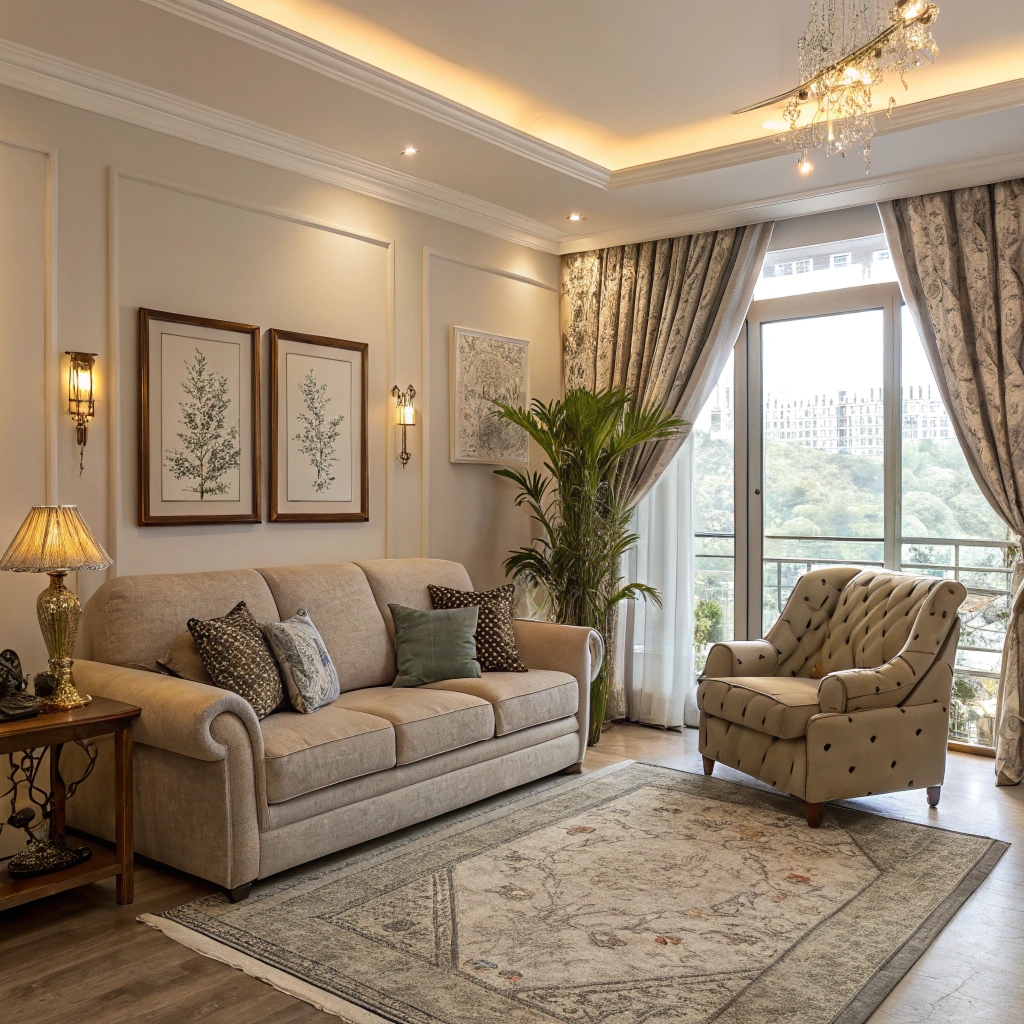
Warm tones, visible grain, patina that tells a story. Aged wood brings warmth and character to a space. Each piece carries its history in its surface, in its grain, in the way it has weathered over time.
Ceramic Surfaces
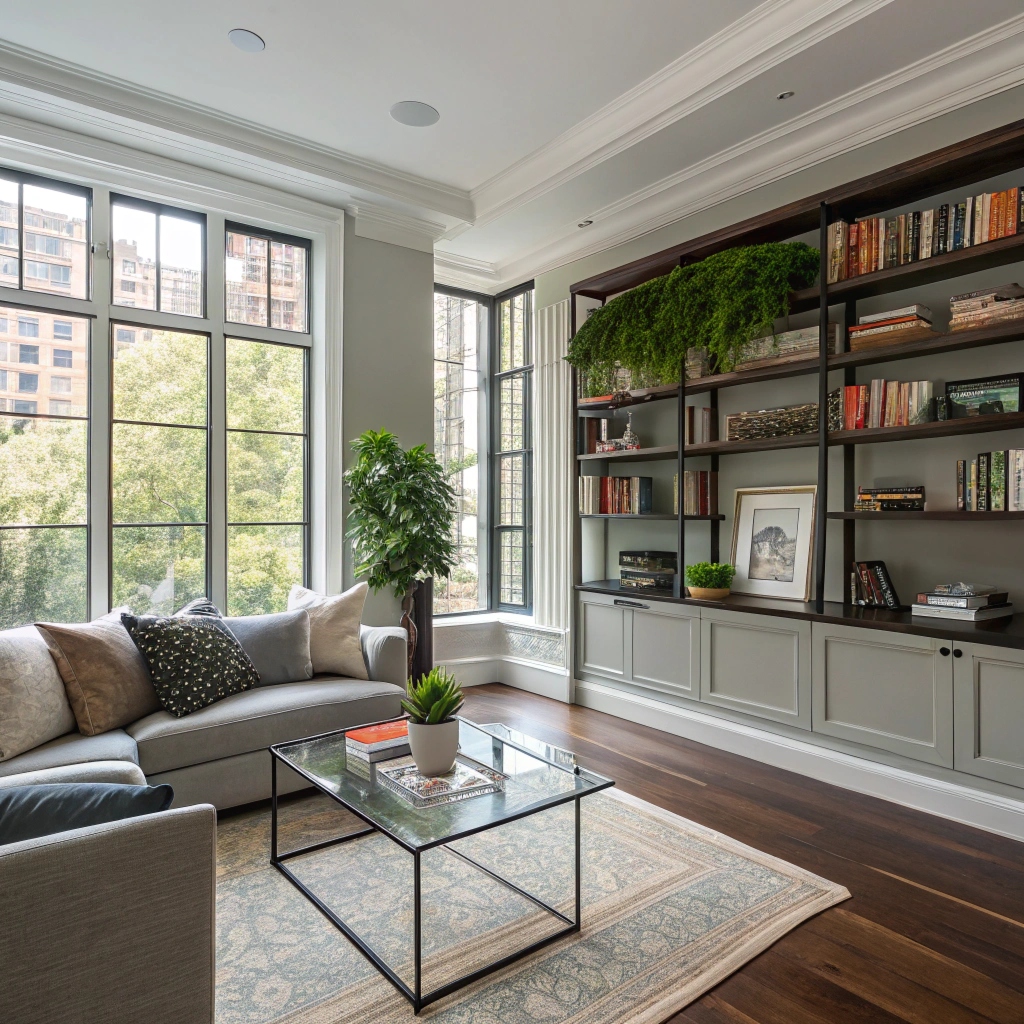
Matte glazes, organic forms, quiet presence. Ceramic objects provide form and texture without overwhelming. Their matte surfaces absorb light gently, creating soft shadows and subtle reflections.
Brass Accents
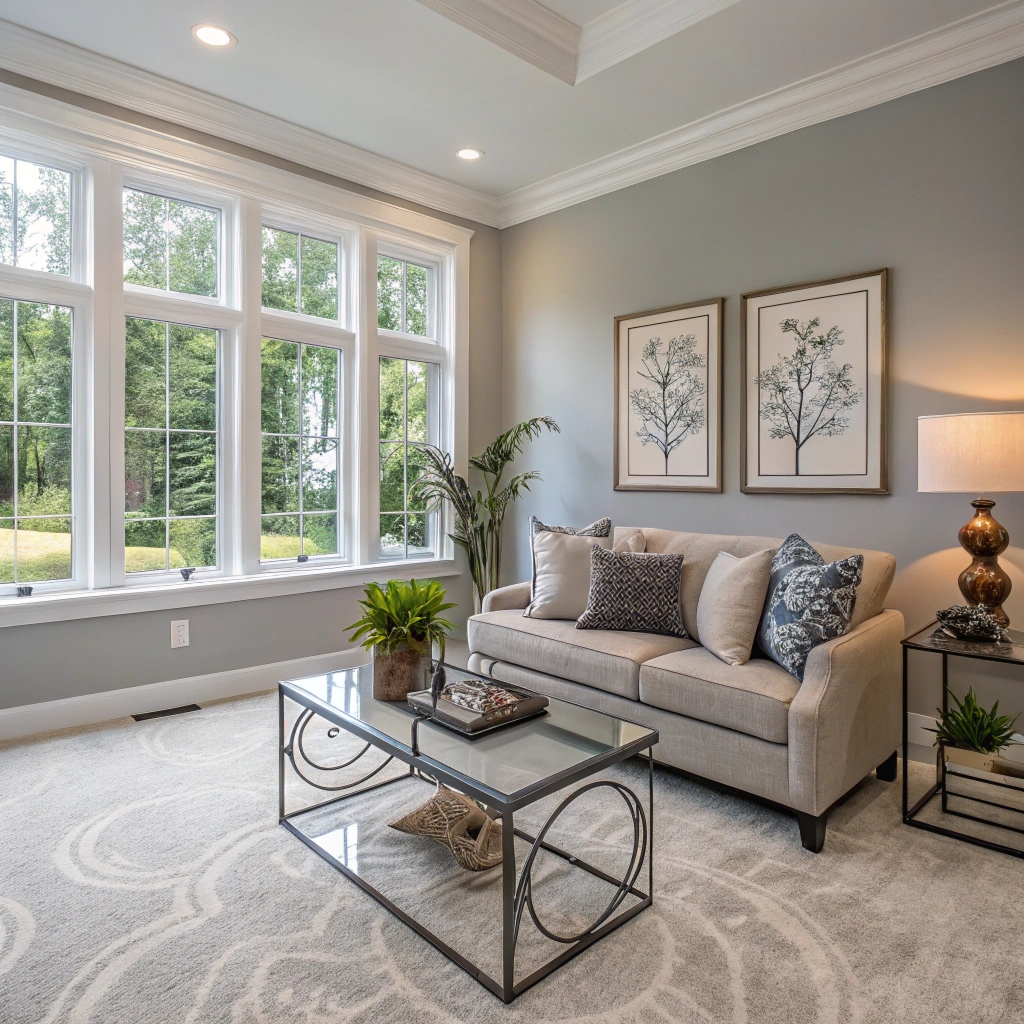
Sun-warmed tones, soft reflection, aged elegance. Brass develops patina over time, moving from bright to warm, from reflective to matte. This aging process adds depth and character to objects.
Natural Stone
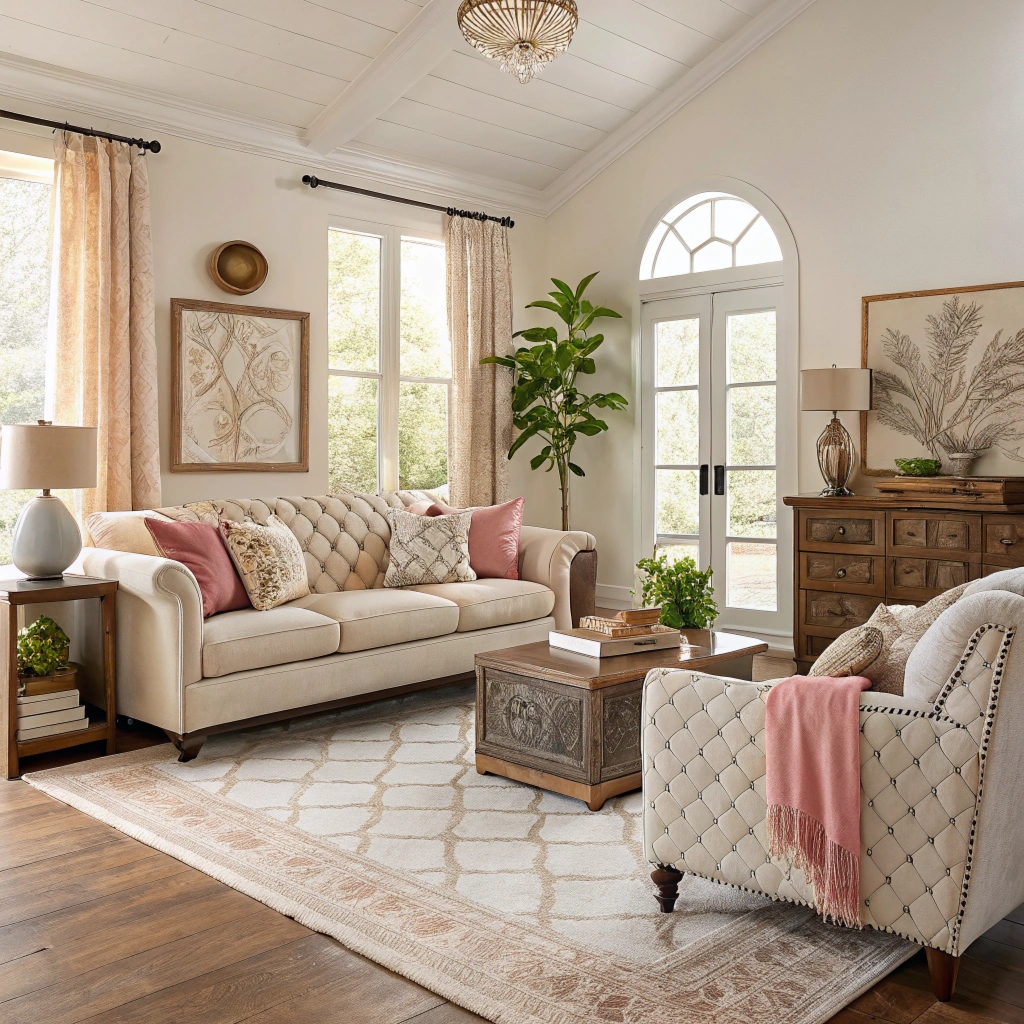
Varied textures, subtle colour variation, timeless quality. Natural stone provides weight and permanence. Its variations in tone and texture create visual interest while maintaining calm.
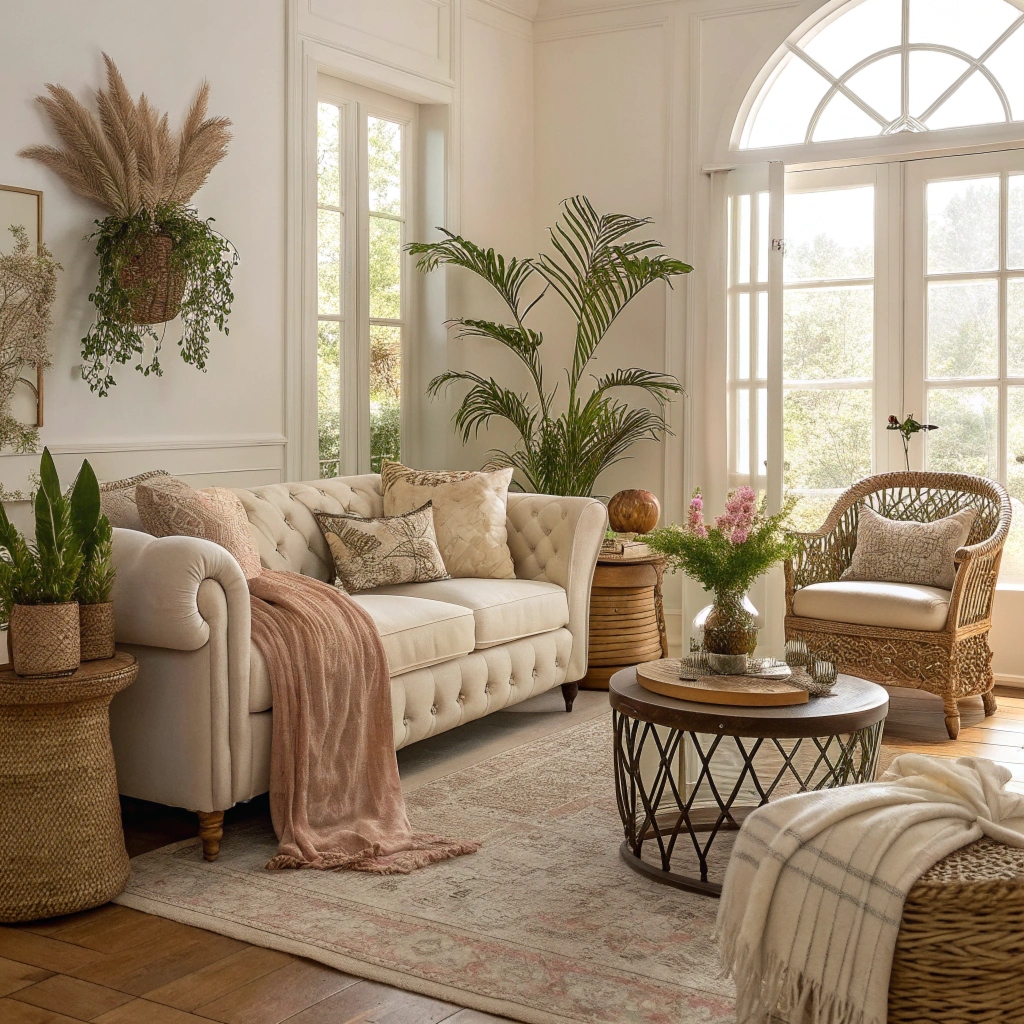
Woven Textiles
Textural depth, natural fibres, handcrafted quality. Woven textiles add layers of texture and warmth. Their irregular surfaces catch light in interesting ways, creating subtle visual movement.
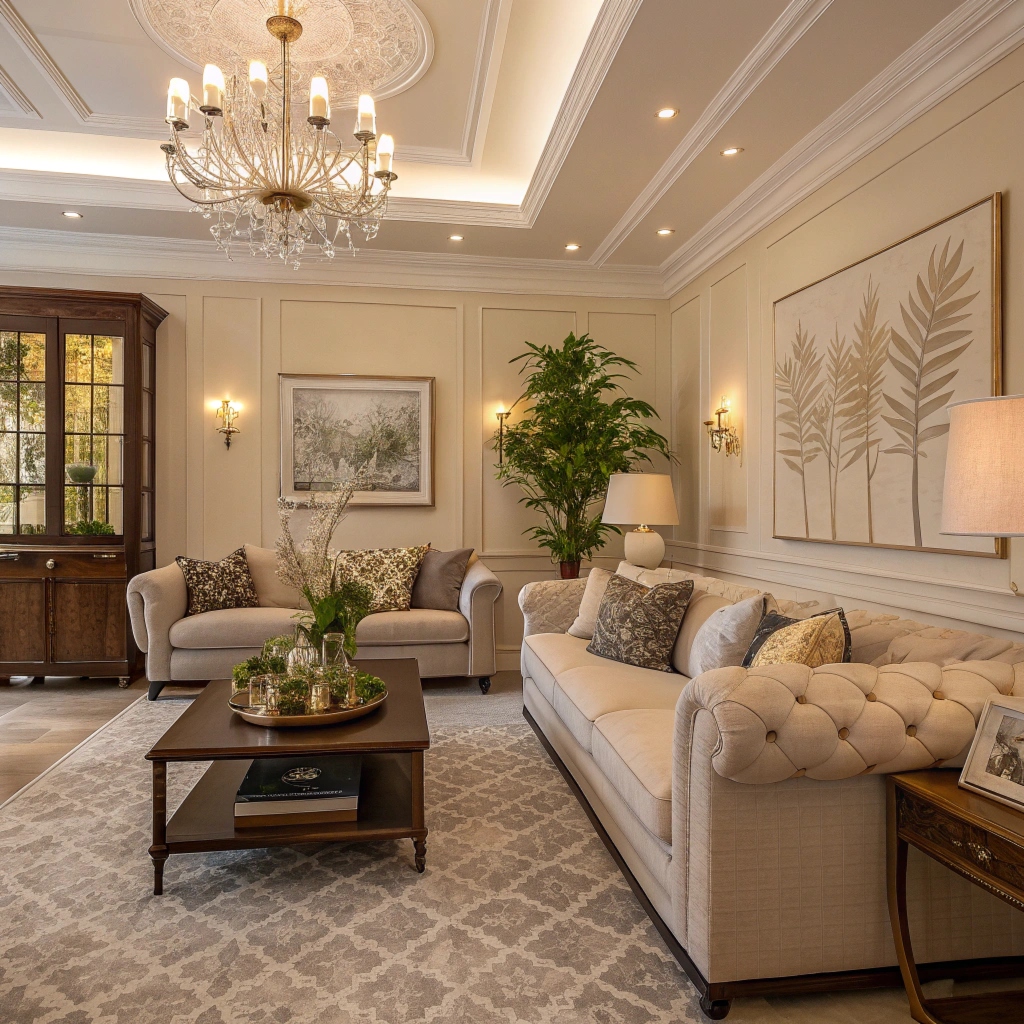
Material Relationships
Materials work in relationship to one another. The roughness of aged wood against the smoothness of ceramic. The matte quality of linen against the subtle reflection of brass. These relationships create visual interest and depth.
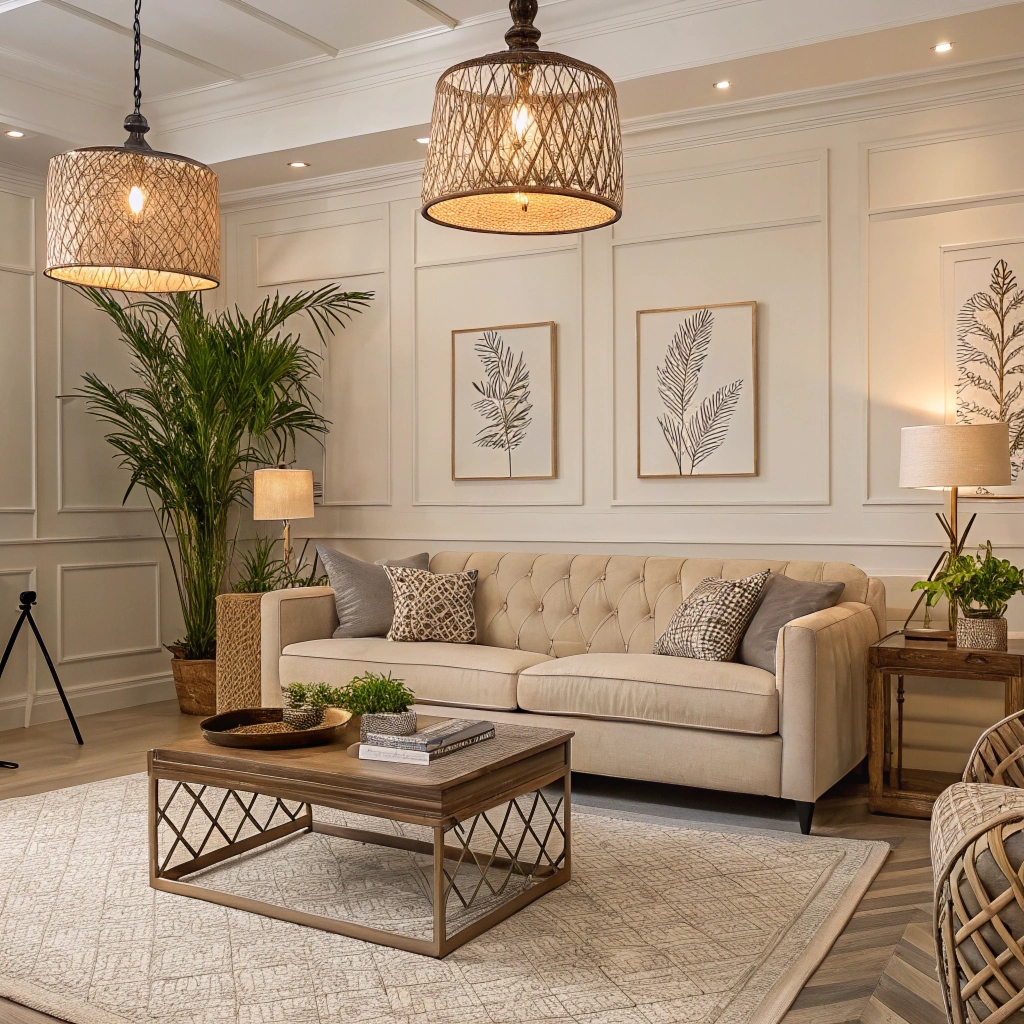
Materials in conversation
Texture and Light
Texture affects how materials respond to light. Rough surfaces create shadows and highlights. Smooth surfaces reflect light more evenly. Matte surfaces absorb light gently. These different responses to light contribute to the overall atmosphere of a space.
We consider how materials will look at different times of day, in different light conditions. A material that appears warm in afternoon light may read differently in morning light. This variability is part of the material's character, part of how it contributes to a space.
Aging and Patina
We favour materials that age gracefully. Materials that develop patina, that show wear, that tell a story through their surface. This aging process is not a flaw; it is part of the material's beauty, part of how it settles into a space over time.
Natural materials age in ways that synthetic materials do not. Wood develops grain patterns. Brass tarnishes to warm tones. Linen softens and relaxes. These changes add character and depth, creating materials that feel lived-in and authentic.
Tactile Experience
The tactile quality of materials informs how we experience a space. Rough textures against smooth surfaces, matte finishes beside reflective ones—these contrasts create visual interest and depth that can be felt as well as seen.
Material Selection Process
We select materials through observation and understanding. We consider how materials respond to light, how they age, and how they contribute to the overall atmosphere of a space.
Each material choice is informed by the existing character of the space, the way light moves through it, and the desired atmosphere. We favour materials that feel appropriate to their context.
Natural Aging
We embrace the natural aging process of materials, understanding that patina and wear add character and depth.
Light Response
Materials respond differently to light. We consider these responses when selecting and placing materials within a space.
Textural Contrast
Contrasts in texture create visual interest. We work with these contrasts to create depth and complexity.
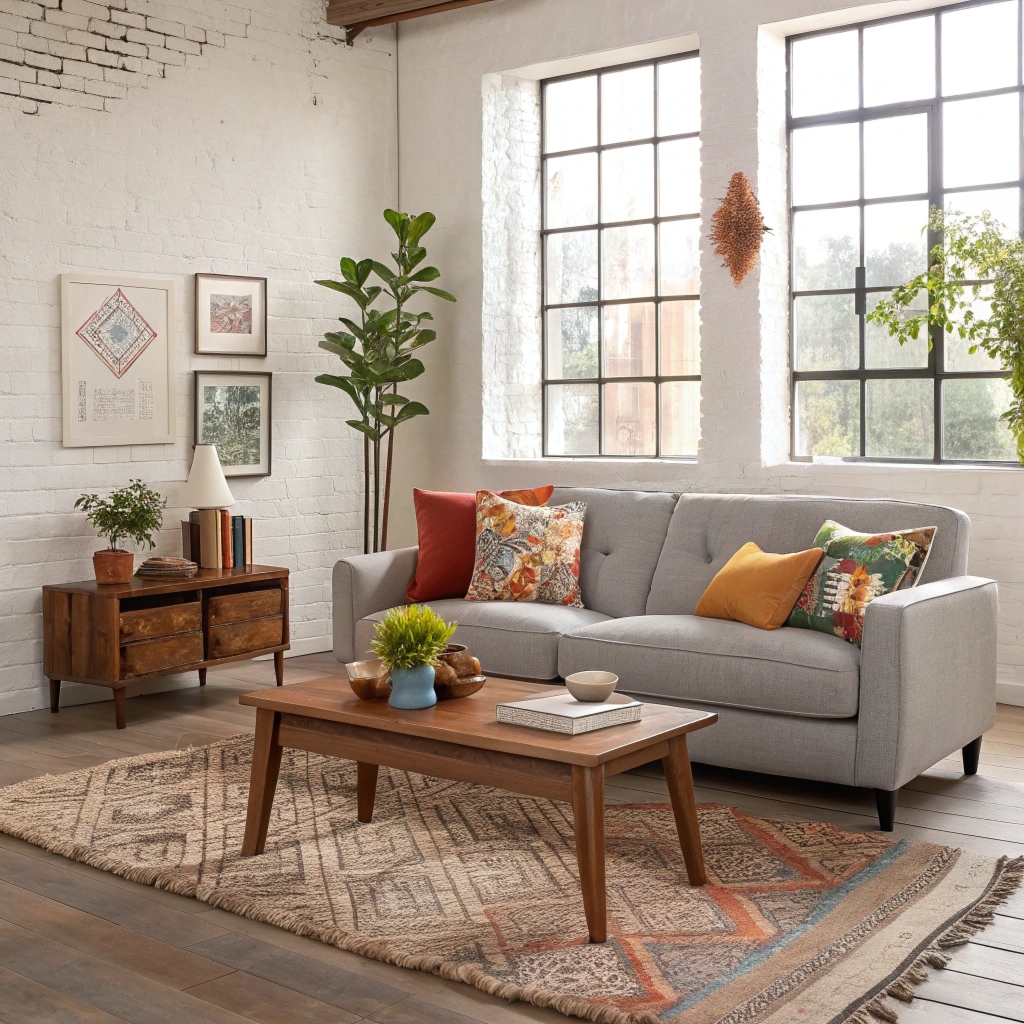
Material Selection Philosophy
We select materials through observation and understanding. Each choice is informed by how materials respond to light, how they age, and how they contribute to the overall atmosphere of a space.
Rough vs Smooth
The contrast between rough and smooth textures creates visual interest. Aged wood against polished ceramic, woven textiles against matte surfaces—these relationships add depth to a composition.
Matte vs Reflective
Matte surfaces absorb light gently, while reflective surfaces catch and redirect it. This interplay creates movement and variation throughout the day.